Voter Views on September 11, 25 Years Later
Twenty-five years after September 11, 2001, a new Change Research survey explores how Americans remember the attacks, what they believe happened, and how they assess the policies and wars that followed. The findings reveal some partisan and generational divides on questions of accountability, legacy, and choices of the post-9/11 era.
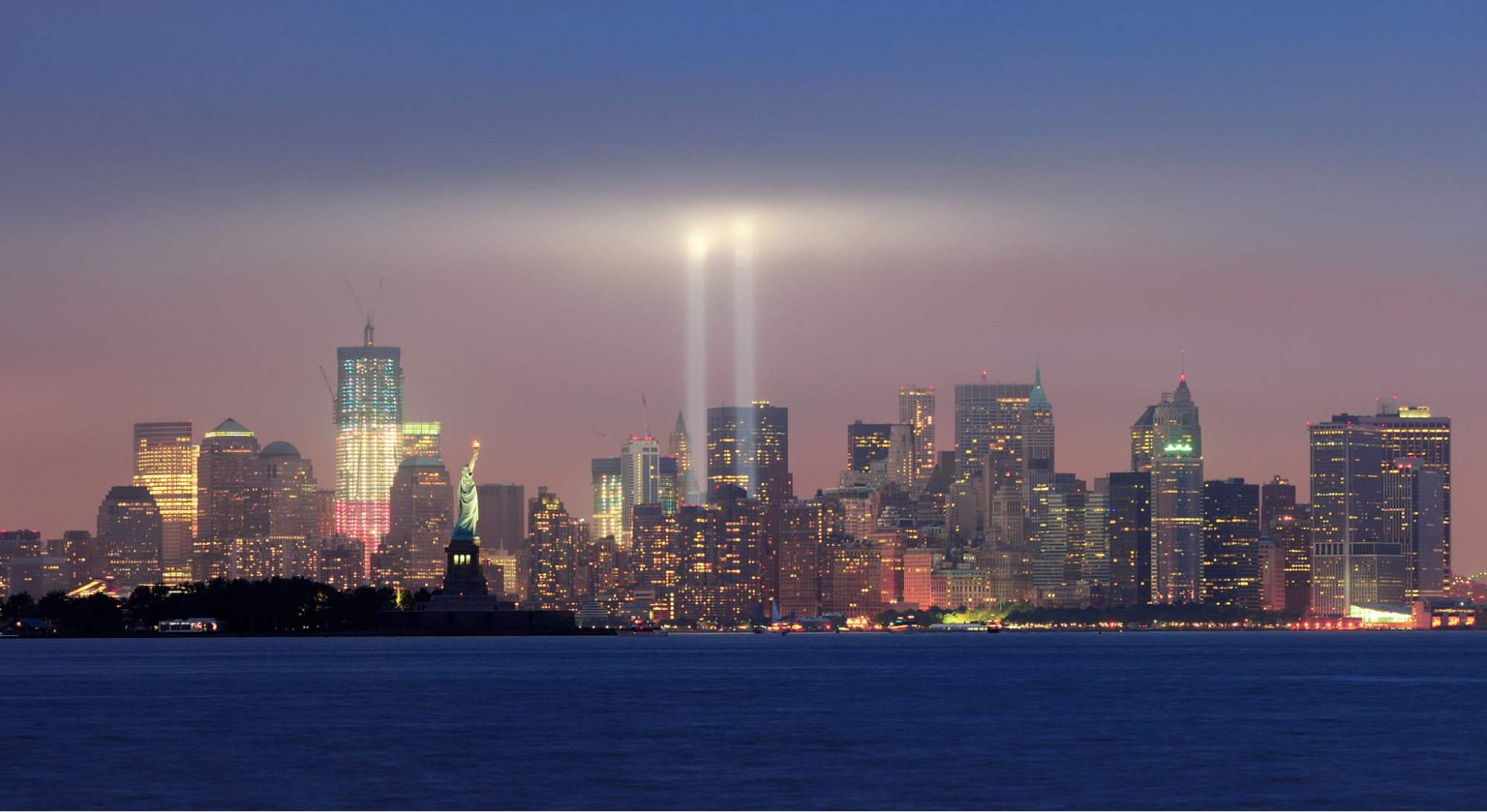
September 11, 2026 marks the 25th anniversary of the terrorist attacks that killed nearly 3,000 Americans and reshaped the country’s national security policy for a generation. Twenty-five years on, there are still questions and concerns about intelligence accountability, the costs of the post-9/11 wars, and American approaches to terrorism.
A Change Research national survey of 2,045 registered voters, conducted August 8–13, 2026, finds that 19% of voters consider the September 11th attacks to have had the greatest impact on the United States over the past two decades. 41% cited the election and re-election of Donald Trump as most consequential, and 34% cited the COVID-19 pandemic.
Impact in Historical Perspective
The past 25 years have brought a succession of events that voters now weigh alongside September 11th when assessing what most shaped the United States. 41% of voters cited the election and re-election of Donald Trump as the event of greatest impact on the United States over the past two decades, more than any other option we asked about. 34% cited the COVID-19 pandemic, and 19% cited the September 11th attacks. 4% cited the decision to go to war in Iraq, and 3% cited the 2008 financial crisis.
66% of Democrats cited Trump’s election as the defining event of the past two decades, compared to 18% of Republicans. 51% of Republicans cited the COVID-19 pandemic as most consequential, compared to 16% of Democrats.
Voter Beliefs About the Attacks
A quarter-century after the attacks, many voters are uncertain or skeptical about official aspects of what happened. 66% of voters said it was at least somewhat likely that some people in the federal government had specific warnings about the attacks but chose to ignore them. 36% said it was at least somewhat likely that federal officials either assisted in the attacks or took no action to prevent them because they wanted the United States to go to war. 33% said it was at least somewhat likely that the collapse of the Twin Towers was aided by explosives planted in the buildings.
41% of Republicans said it was at least somewhat likely that explosives were planted in the Twin Towers, compared to 22% of Democrats. 40% of voters 18 to 34 considered the theory at least somewhat likely, compared to 23% of voters 65 and older.
Post-9/11 Policies and Safety
Voters have largely positive views of post-9/11 security measures but largely negative views of the broader military campaigns that followed. When we asked voters to consider why there have been no major terrorist attacks on U.S. soil since 9/11, 29% said it was mostly because the government and military have done a good job protecting the country. 25% cited luck, 19% said America is a difficult target for terrorists, and 26% were not sure.
65% of voters said increased airport screening measures made the United States safer. 57% said killing Osama bin Laden made the country safer.
Views on the wars that followed were less favorable. 17% of voters said the war in Afghanistan made the United States safer, while 32% said it made the country less safe and 34% said it made no difference. The numbers for Iraq were similar: 17% said that the Iraq war made the country safer, 35% said it made the country less safe, and 30% said it made no difference. When asked to weigh costs against benefits, 59% said the Iraq war was not worth fighting and 52% said the same about the war in Afghanistan. This stands in sharp contrast to the days after September 11, when approximately 90% of Americans supported the U.S.’s war with Afghanistan.
Today there is a sizable gap between the U.S.’s post-9/11 wars: 32% of Republicans said the Iraq war was worth fighting, compared to 5% of Democrats. 36% of Republicans said the Afghan war was worth fighting, compared to 9% of Democrats.
Terrorism Resources and Prevention
Voters have no clear consensus on broader questions of counterterrorism investment. 31% of voters said the United States should have put more resources toward fighting terrorism over the past 20 years. 31% said about the same amount, and 25% said fewer.
Voters were roughly split in their approach to international engagement. 40% said the United States should be very involved in solving international problems, and 41% said the country should not get too involved with international problems. 63% of voters 18 to 34 favored a more isolationist approach, compared to 28% of voters 65 and older.
Methodology
Polling was conducted online from August 8–13, 2026. Using Dynamic Online Sampling to attain a representative sample, Change Research polled 2,045 registered voters nationally. The modeled margin of error is ±2.3 percentage points. Members of AAPOR’s Transparency Initiative disclose all relevant details about our research, with the principle that the public should be able to evaluate and understand research-based findings, in order to instill and restore public confidence in survey results.
See the full data behind this poll
Sign up for the award winning Change Research Data Portal to gain insights like these every month with new polling.