Voters Prioritize AI Safety (Even If It Means Falling Behind China)

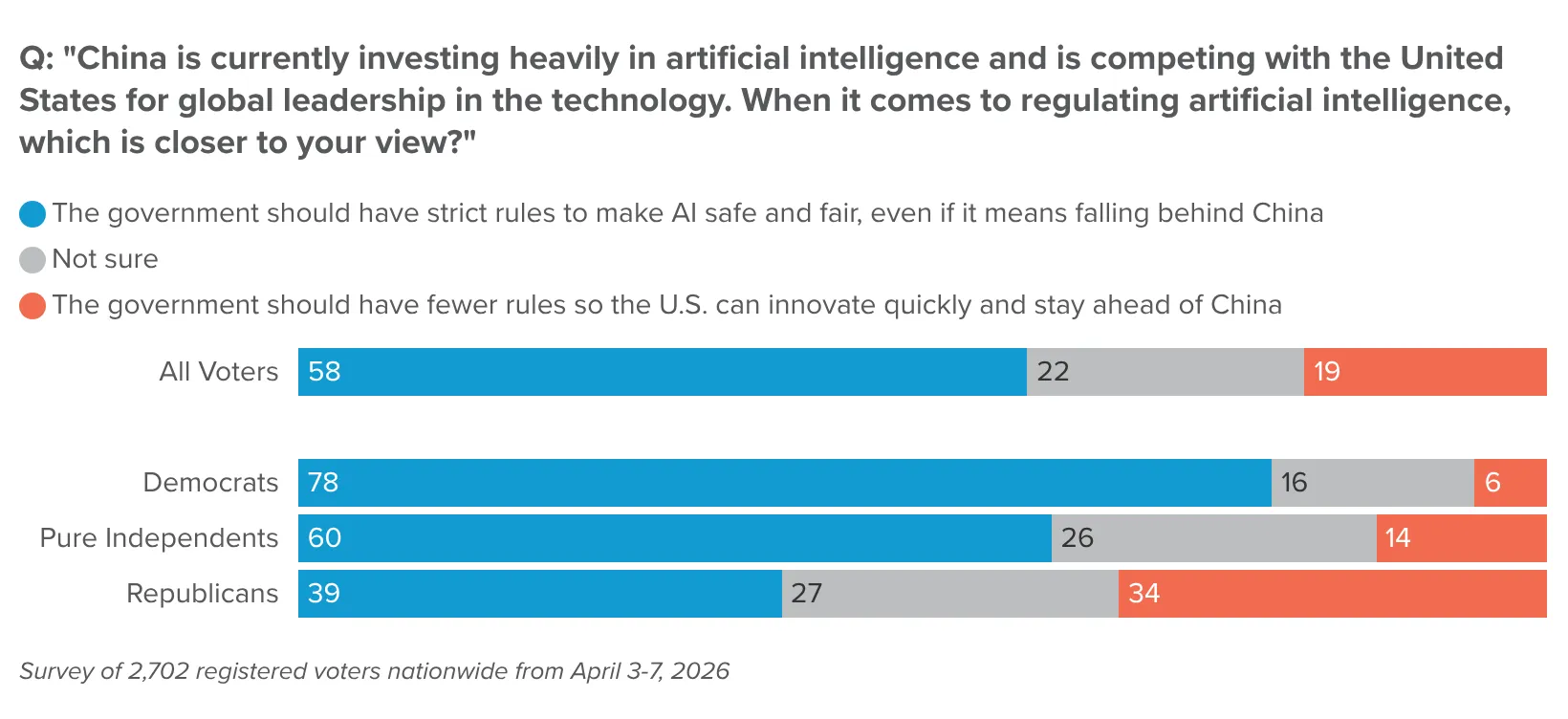
A Change Research survey of 2,702 registered voters, conducted April 3-7, 2026, finds that a majority of Americans prefer stricter regulation of artificial intelligence, even when that choice is framed as potentially ceding the United States’ lead in AI development to China.
A common refrain from policymakers opposing strict AI regulation or AI regulation at the state level is that strict rules will cause the U.S. to fall behind China. President Trump, Senator Ted Cruz, and former White House AI Czar David Sacks have all argued that regulation risks ceding America’s technological lead. But when voters are asked to weigh that trade-off directly, they consistently choose rules and regulation, even if it means potentially losing America’s lead in AI development.
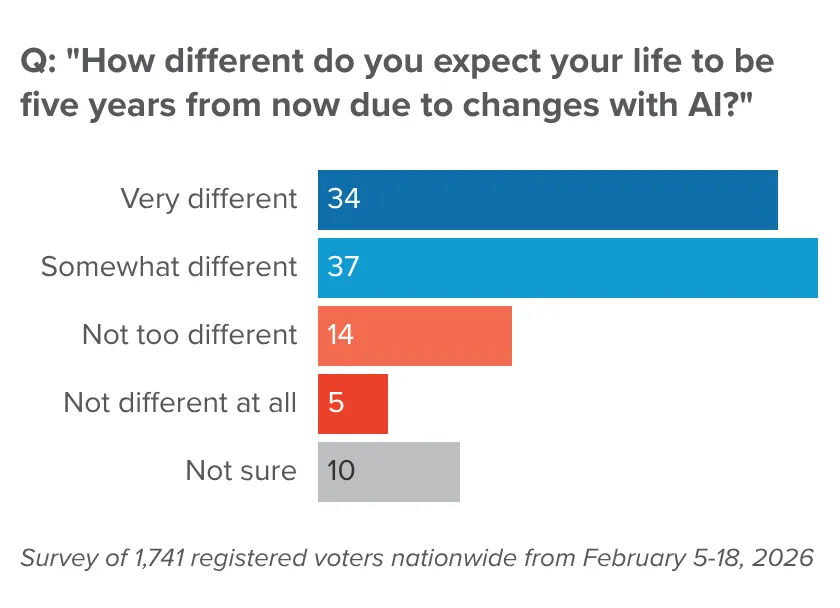
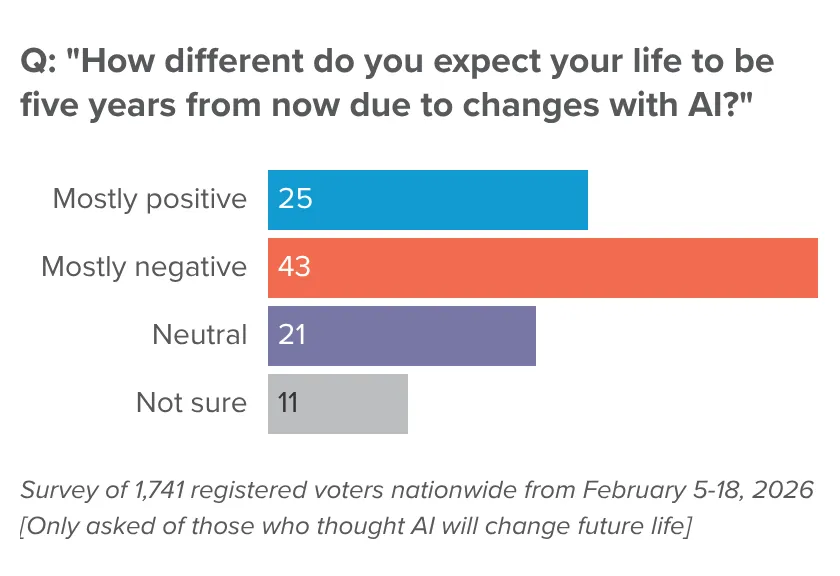
There is broad skepticism towards AI among American voters. A Change Research survey of 1,741 registered voters, conducted February 5-18, 2026, found that 70% of voters think that AI is going to make their lives somewhat or very different in the next five years. And of that 70%, more expect that change to be negative (43%) than positive (25%).
 |  |
|---|
Safety Over Competitiveness
American voters generally support rules that favor safety and data security, even if those rules slow development. This holds even when framed as a tradeoff between competitiveness with China and safety. When forced to choose, the majority of American voters in the April 2026 survey would rather have stricter rules for AI, even if it means potentially ceding the lead in AI to China. There is a clear partisan difference, as Republican voters are more opposed to AI regulation than Democrats or independents. Still, more Republicans want regulation of AI than oppose it, including when that tradeoff is framed as potentially ceding our advantage to China.
A Consistent Pattern
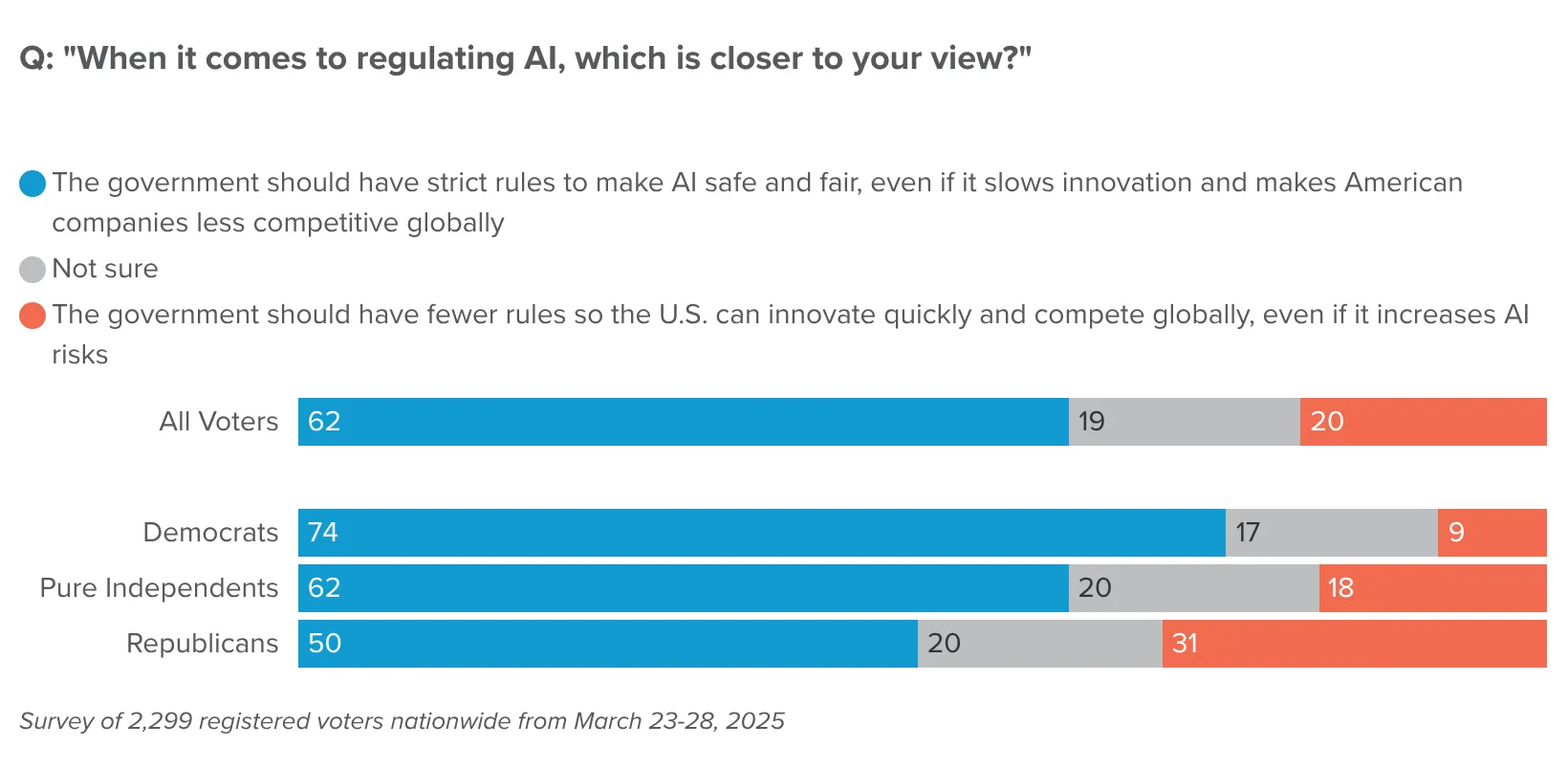
A Change Research survey of 2,299 registered voters, conducted March 23-28, 2025, found similar results. At that time, a majority of voters preferred stricter rules at home for AI, even if it made American companies less competitive globally. While we, once again, see variation across party lines, there is majority support for stricter rules across party identification.
Support for U.S. Competitiveness
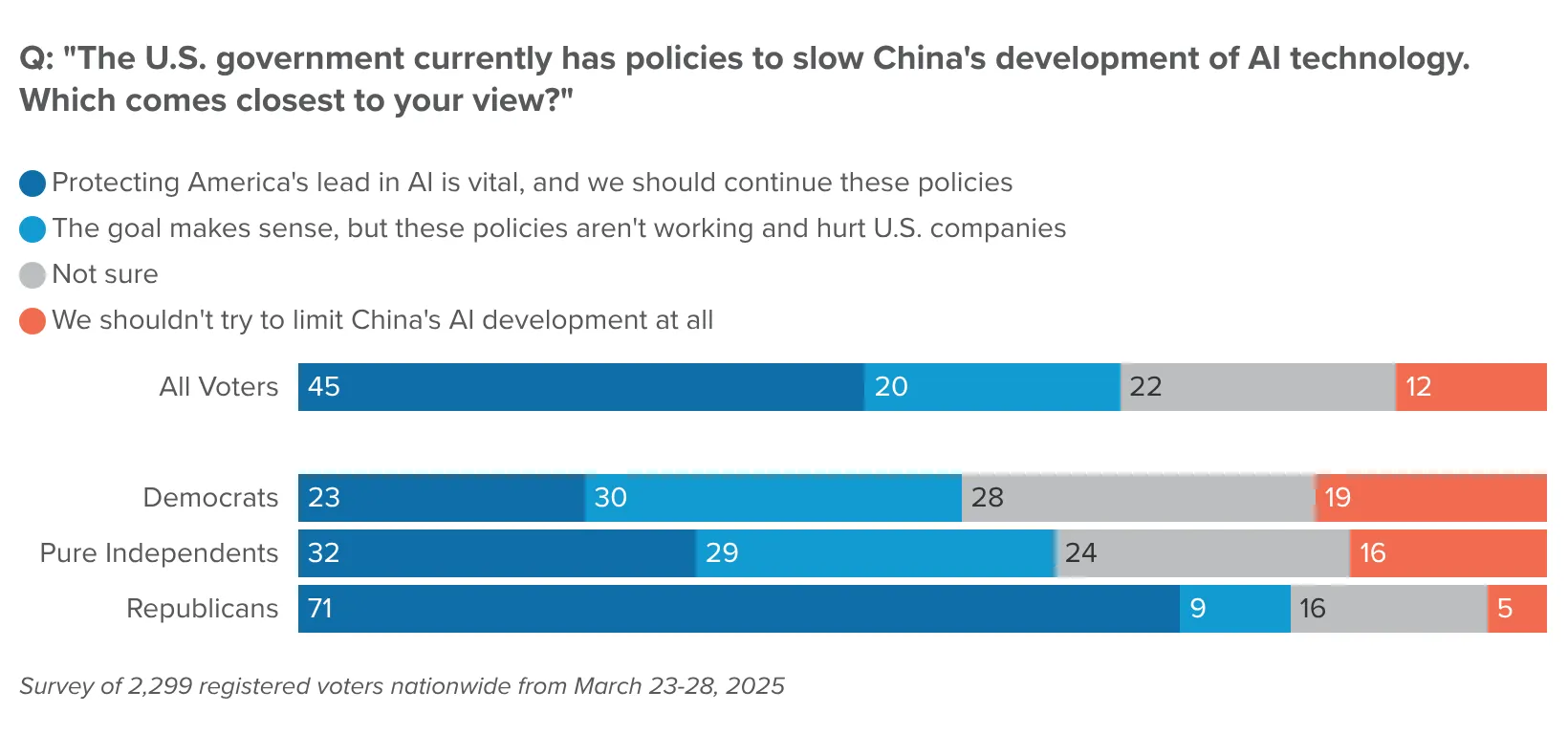
The same March 2025 survey found that a majority of voters support maintaining America’s lead in AI and slowing China’s AI development. While voters were mixed on whether current policies were effective at doing so, the majority still supported the goal of limiting China’s progress, again across partisan lines. This means voters are not indifferent to the competitive landscape.
Key Findings
Taken together, findings show that voters hold two priorities simultaneously. They support protecting America’s lead in AI development, and they support domestic safety protections. However, when voters have to choose between those two priorities, most choose safety.
See the full data behind this poll
Sign up for the award winning Change Research Data Portal to gain insights like these every month with new polling.