The Political Climate Is Americans' Top Stressor
A Change Research national survey of 1,541 registered voters, conducted March 8-12, 2026, finds that 30% of Americans name the political situation as the single biggest source of stress in their lives right now, more than name money, health, or work.
April marks National Stress Awareness Month, observed every year since 1992 as a national effort to raise awareness about the causes and effects of stress. This year, our data puts numbers to what many Americans are feeling. The survey finds a country with many negative emotions, and increasingly they point to its politics as the source.
The National Mood
When we asked voters to describe how they feel about the country right now, frustrated (17%) and exhausted (13%) topped the list, followed by angry (12%) and anxious (7%). Sixteen percent say they feel hopeful, and 11% say they are proud. Stressed was chosen by 9% of voters overall.
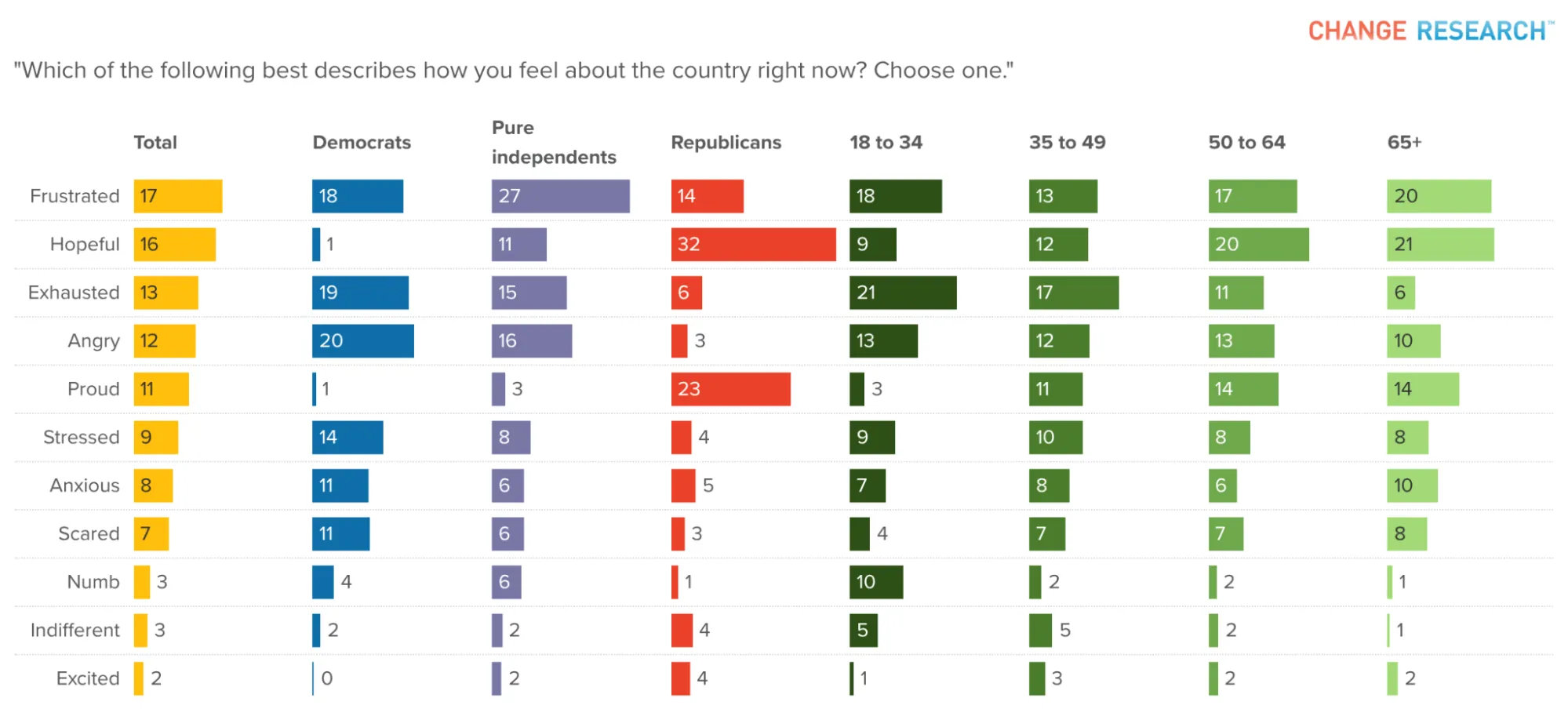
Women are more likely than men to describe their mood as exhausted (15% vs. 11%). The feeling is sharpest among younger voters; 22% of voters 18 to 34 chose exhausted, compared to just 5% of those 65 and older. Democrats are also more likely to say they are exhausted (20%) than Republicans (6%).
What’s Driving the Stress
The political situation was the largest source of stress cited by survey respondents. Thirty percent of voters name it as their single biggest stressor, well ahead of money and finances (22%), the state of the world or global events (12%), and physical or mental health (11%). Work and career (6%), family and relationships (5%), and housing (3%) round out the list. Eleven percent say none of these apply.
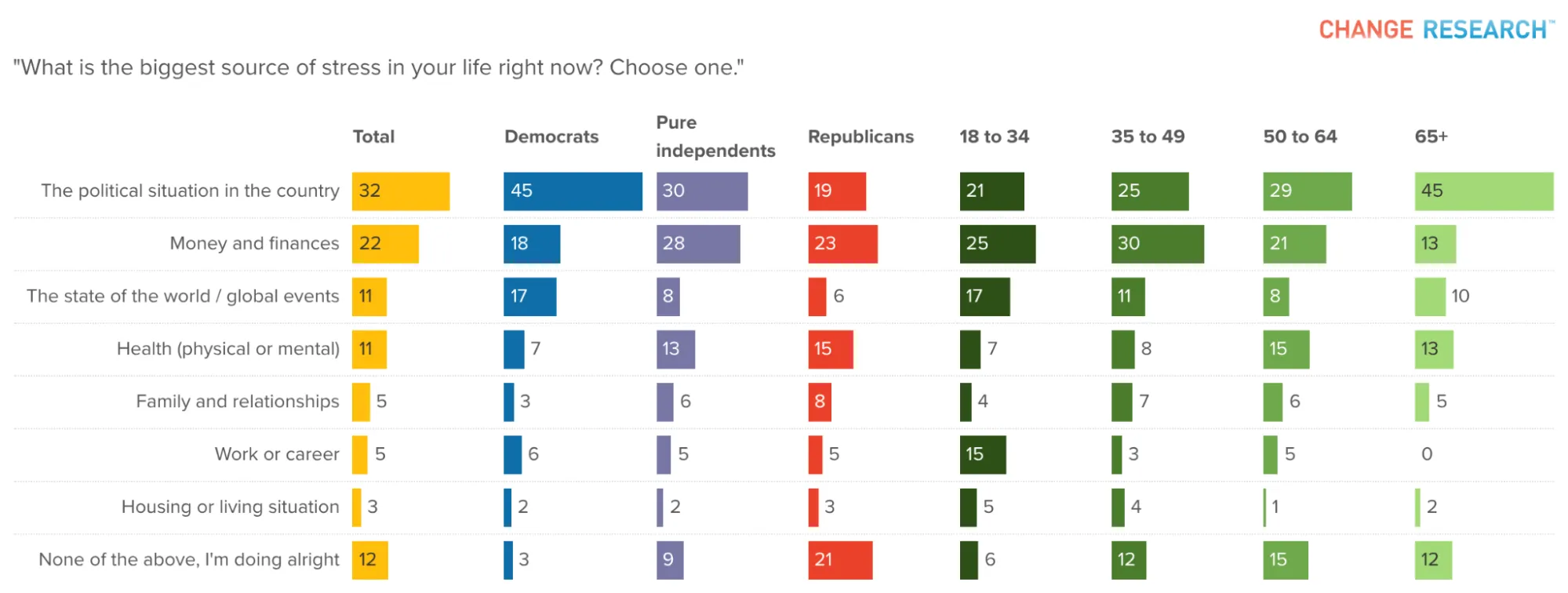
Forty-two percent of Democrats name the political situation as their top stressor, compared to 19% of Republicans. Age also plays a role; 43% of voters 65 and older point to politics, the highest of any age group.
Financial stress falls harder on voters in their prime working and family-raising years. Thirty-one percent of 35 to 49 year olds name money and finances as their top stressor, compared to 14% of those 65 and older. For younger voters, work and career registers at higher rates as well; 15% of 18 to 34 year olds name it as their top concern, versus 6% overall.
Social Media and Mental Health
For many voters, going offline can help. Nearly a third (32%) say they deleted or took a break from at least one social media platform for their mental health in the past year. Nine percent say they have not gone back, and 23% say they eventually returned. Another 31% say they have thought about stepping away but have not acted yet. A third (33%) say social media has no effect on their mental health.
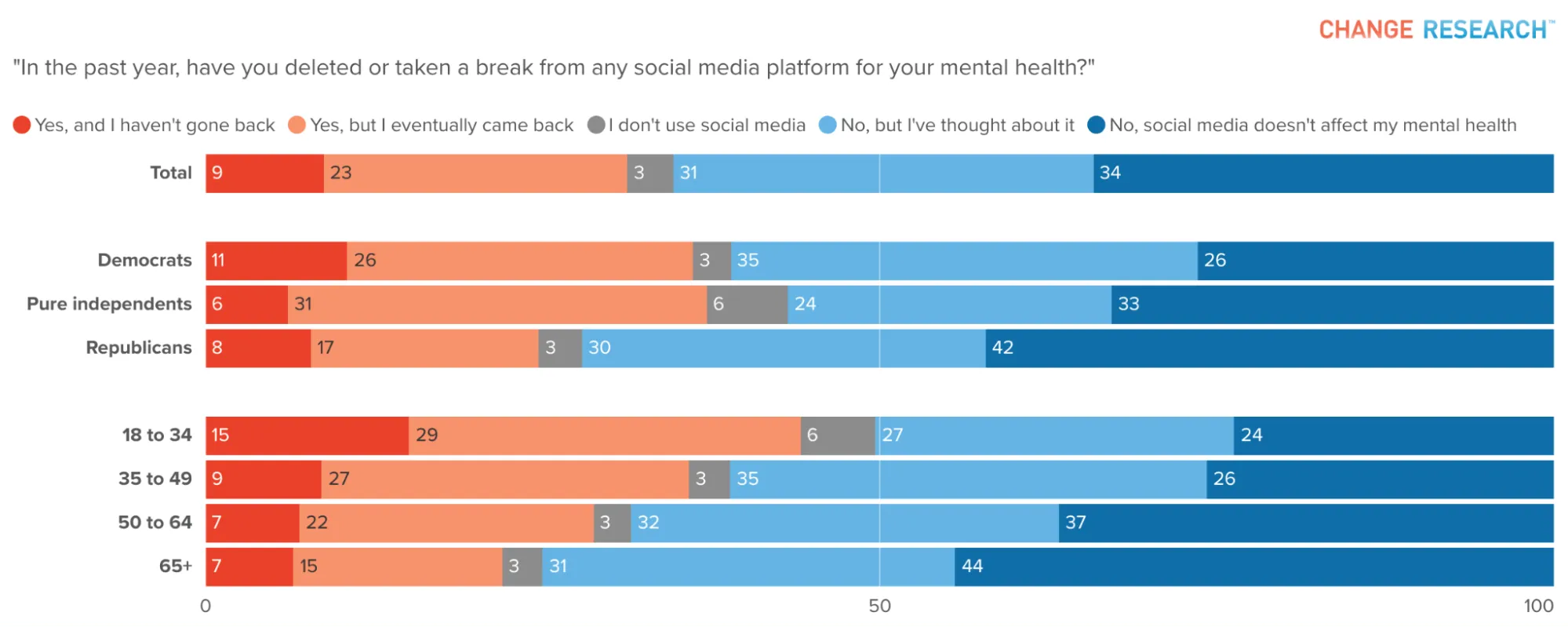
Younger voters are most likely to have taken a break. Fifteen percent of 18 to 34 year olds say they stepped away from a platform and stayed away, compared to 7% of those 65 and older.
Methodology
Change Research surveyed 1,541 registered voters online from March 8 to 12, 2026. The margin of error is +/- 2.6 percentage points. Full crosstabs, including breakouts by party, gender, age, race, and military family status, are available through the Change Research Data Portal.
See the full data behind this poll
Sign up for the award winning Change Research Data Portal to gain insights like these every month with new polling.