The Fraud Prevention vs. Access Debate: Voters Perceptions of Welfare Fraud
New polling shows most voters have heard about fraud in Minnesota, alongside a general belief that fraud is common in welfare and social services programs.
In the wake of large-scale fraud involving welfare and social services in Minnesota, new polling from Change Research reveals that a majority of voters believe that fraud in welfare and social service programs is common across the United States, though perceptions differ sharply along partisan lines.
The poll conducted January 13-19, 2026, interviewed 1,348 registered voters nationally as part of Change Research’s internal Compass Poll series, which informs the Change Research Data Portal.
Awareness of fraud involving Minnesota’s welfare and social service programs is widespread among voters
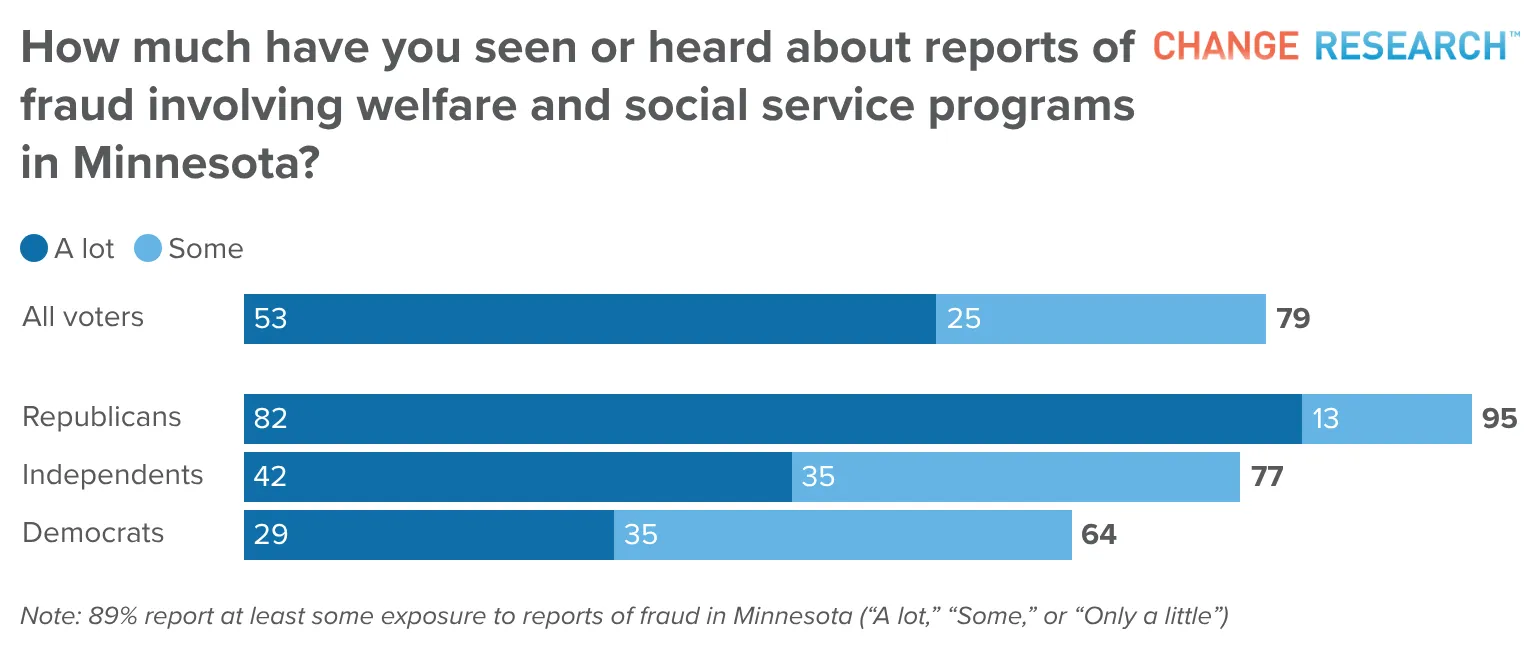
Nearly 90% of voters have seen or heard reports of fraud involving welfare and social service programs in Minnesota, including a majority (53%) who have seen or heard “a lot”. The amount of exposure to news about fraud in Minnesota varies, however, with Republicans much more likely to report they have seen or heard “a lot” (82%) than Democrats (29%) or Independents (42%).
Among voters who have seen or heard about reports of fraud in Minnesota’s welfare and social service programs, concern runs high. Two in three say they are at least somewhat concerned, including half who are very concerned. Concern is near-universal among Republicans (97%), but far less common among Democrats (36%).
Against the backdrop of fraud in Minnesota, most voters believe welfare fraud is common nationwide
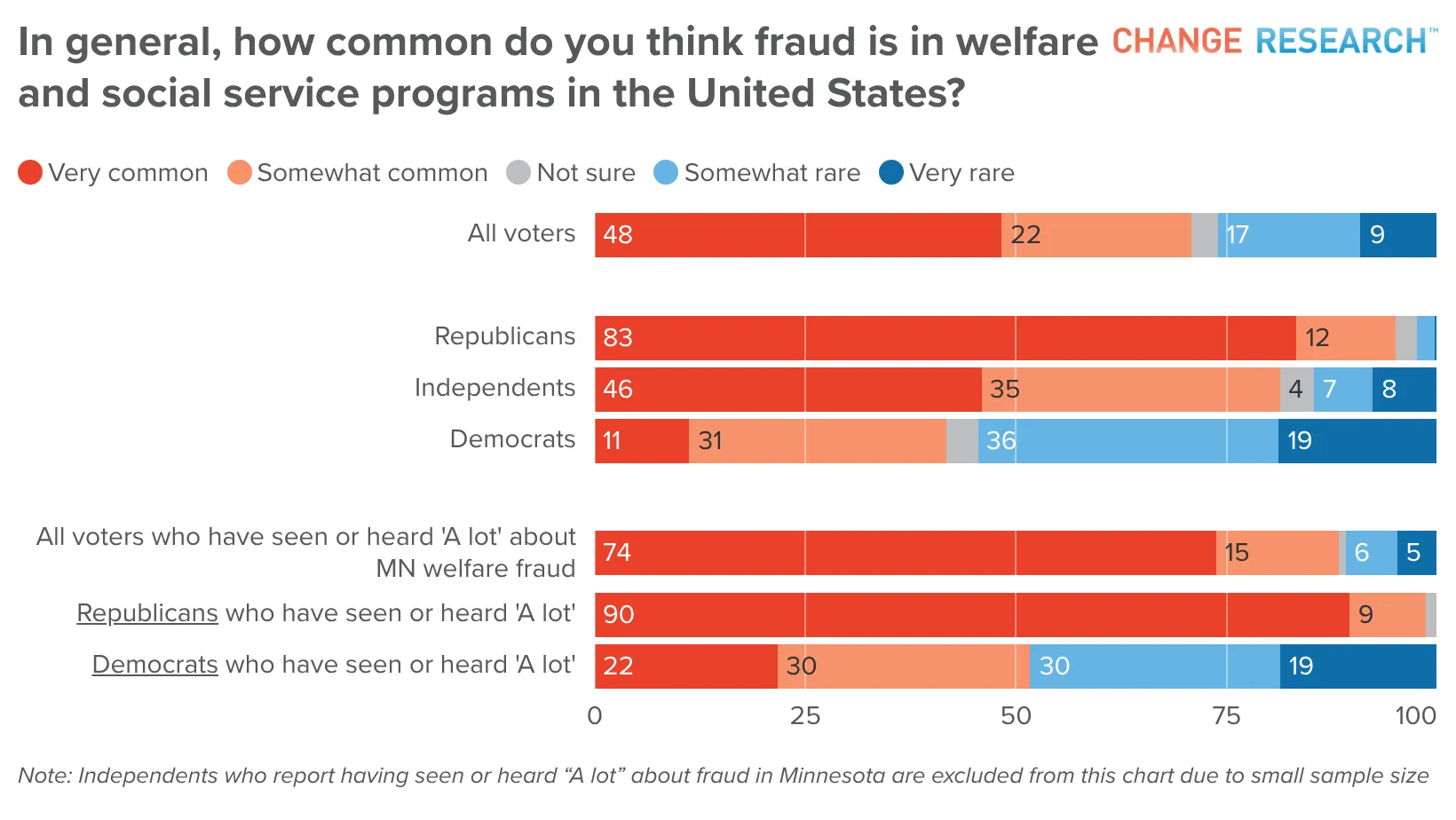
Seven in ten voters believe fraud is at least somewhat common in welfare and social service programs nationwide, while just over a quarter say it is rare. Republicans (95%) and Independents (81%) are far more likely than Democrats (42%) to view fraud as common.
Among Democrats, views are divided, with a slight majority (54%) believing fraud is rare. Democrats who report having seen or heard “a lot” about fraud in Minnesota are more likely to believe fraud is common nationwide.
Voters differ in how they think welfare and social service programs should balance access and fraud prevention
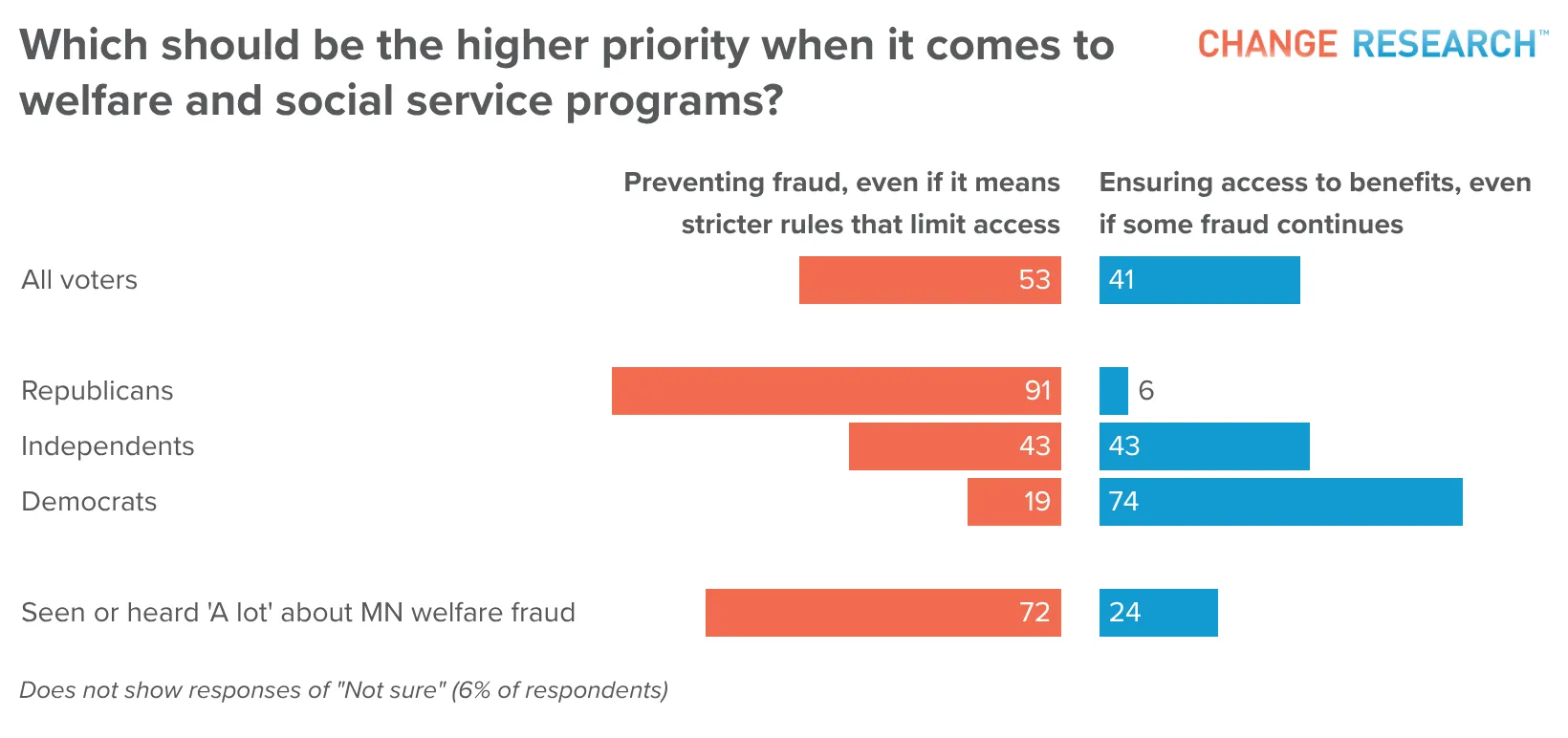
Voters differ sharply in how they think welfare and social service programs should balance access and fraud prevention. A slim majority of voters (53%) say preventing fraud should be the top priority for welfare and social service programs, even if it means stricter rules that limit access, while 41% prioritize ensuring access to benefits, even if some fraud continues.
As with perceptions of fraud, views on how programs should handle fraud vary sharply by partisanship. Nine in ten Republicans say preventing fraud should take priority, even at the cost of reduced access, compared with just 19% of Democrats. Democrats, by contrast, widely prioritize access, with 74% saying benefits should be ensured even if some fraud continues. Independents are evenly split on what they think should be prioritized when it comes to welfare and social services. Finally, voters who have seen or heard a lot about welfare fraud in Minnesota largely favor prioritizing fraud prevention.
About This Poll
Change Research conducted this survey among 1,348 registered voters from January 13-19, 2026. The modeled margin of error is 2.9%. The poll includes responses across party identification, gender, age, ethnicity, and education levels.
See the full data behind this poll
Sign up for the award winning Change Research Data Portal to gain insights like these every month with new polling.