How Mikie Sherrill Won: NJ Turnout Analysis
New Jersey Governor Mikie Sherrill’s historic victory was powered by winning over a significant number of 2024 Trump voters, according to a new Change Research analysis of the 2025 voter file. Governor Sherrill reversed recent declines in Democratic performance statewide and became the first Democrat to follow a two-term Democratic governor since 1960. This analysis breaks down the partisan divide in the electorate based on Change Research’s 2024 vote choice history model.
Last November, a record 3,334,359 people voted in the election for governor, continuing the increase in electoral participation since Donald Trump’s 2016 victory.
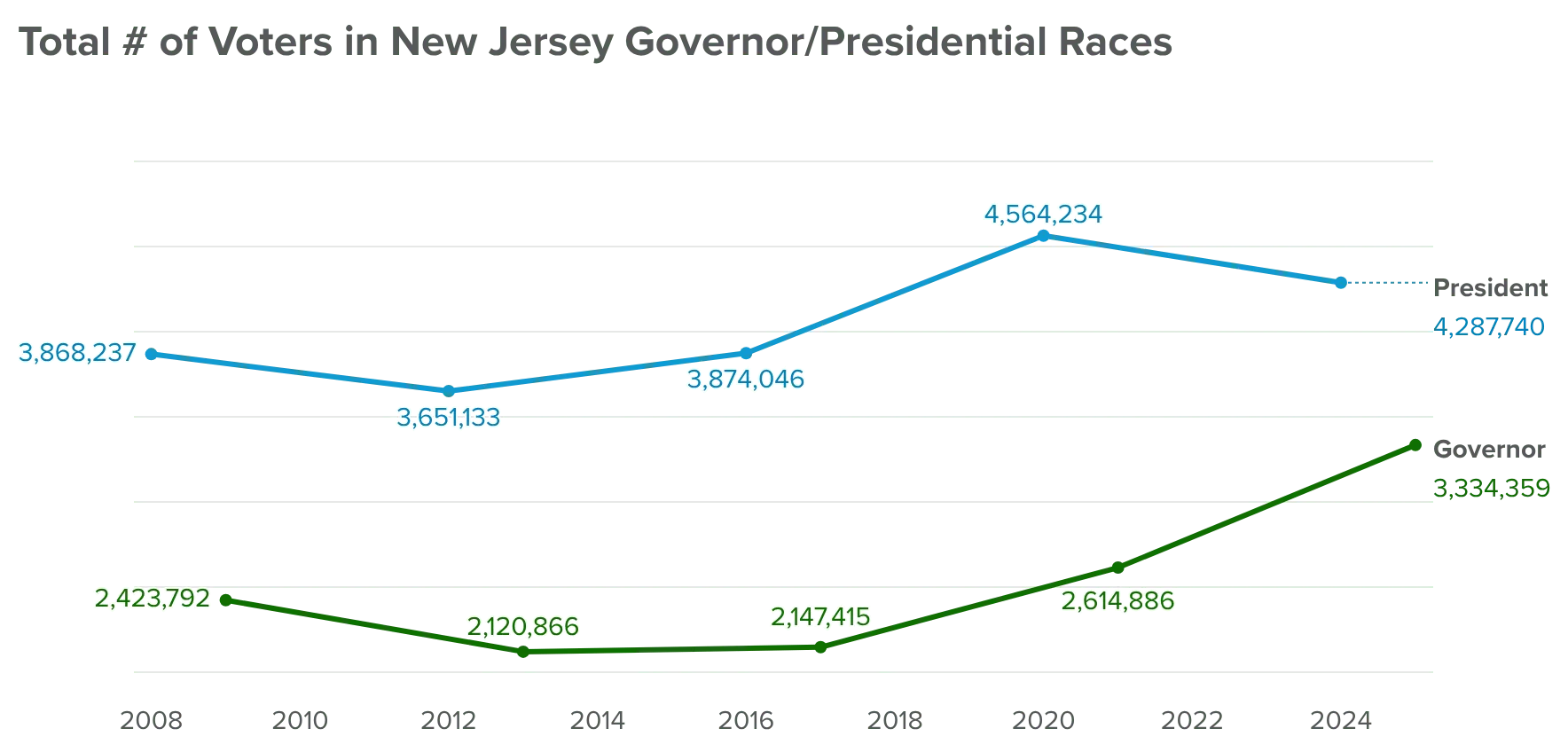
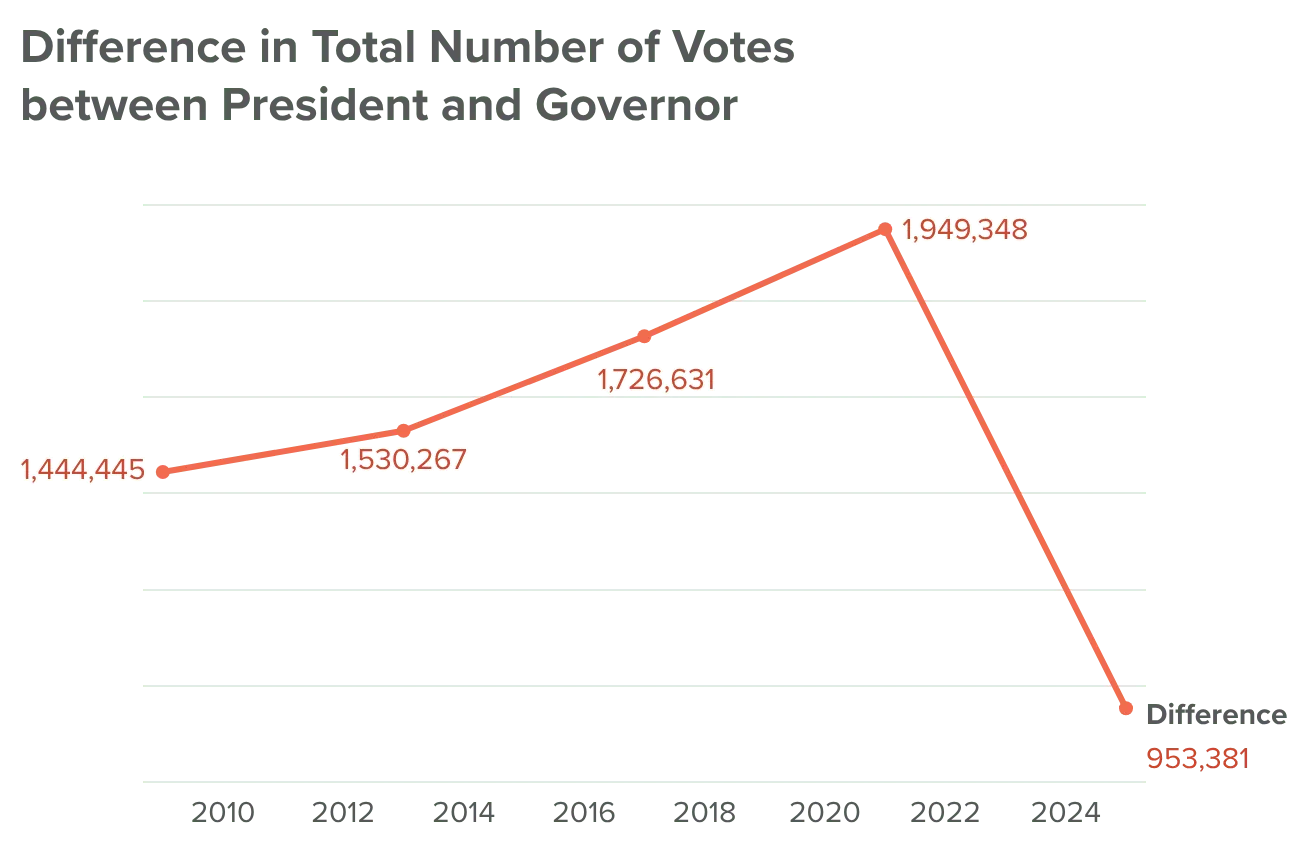
Despite a 276,494-vote decline in the 2024 presidential contest compared to 2020, the gubernatorial electorate expanded by 719,934 voters. This represents the smallest gap between participation in the presidential and gubernatorial contests in recent history.
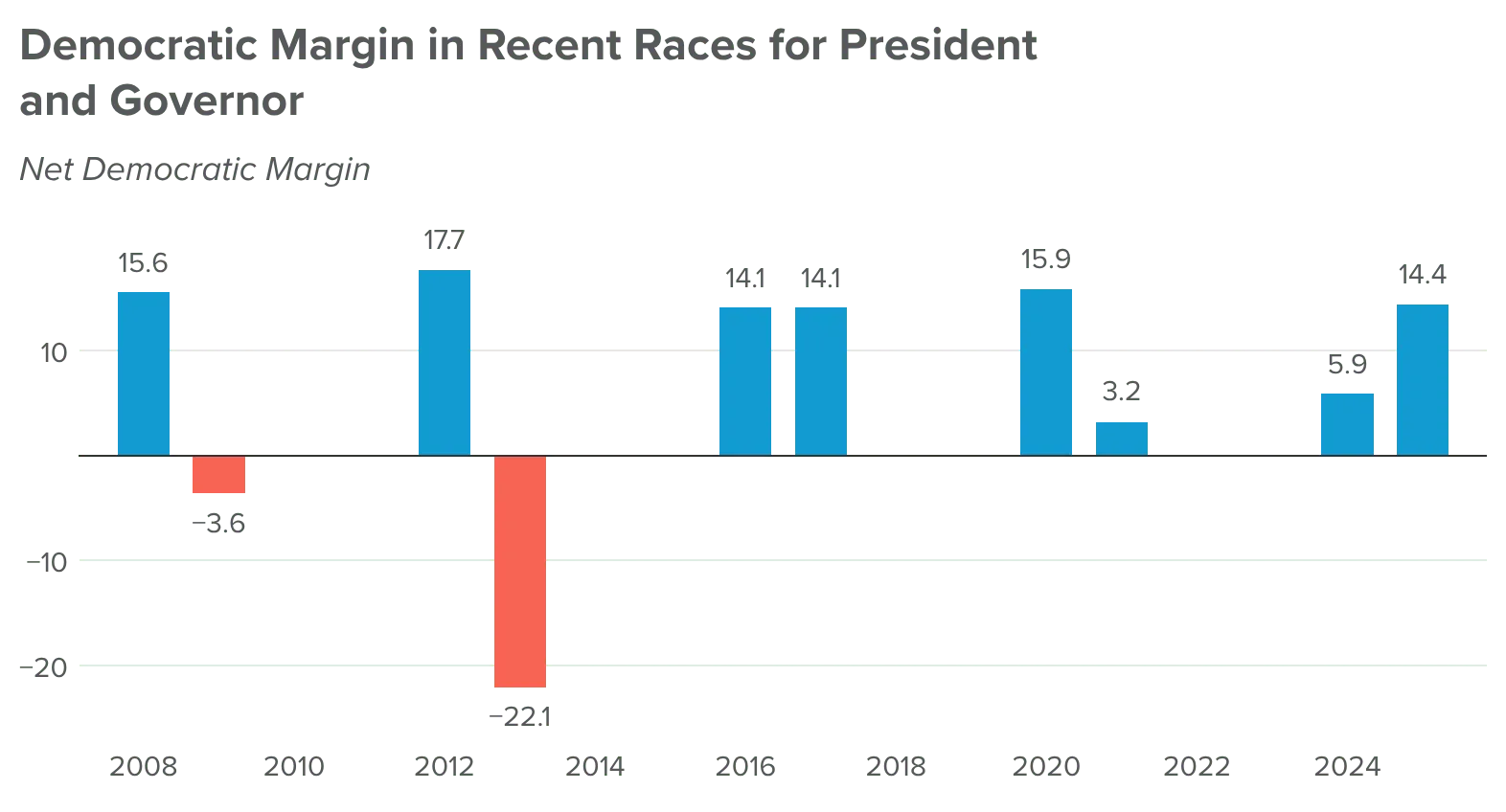
In 2024, Kamala Harris won New Jersey by only 5.9 points, after she and Joe Biden won the state by 15.9 points in 2020. In 2021, Republican gubernatorial nominee Jack Ciattarelli lost by just 3.2 points. Given this, many pundits expected the 2025 election to be close. Instead, U.S. Representative Mikie Sherrill won by 14.4 points, a greater margin than Governor Phil Murphy won in 2017.
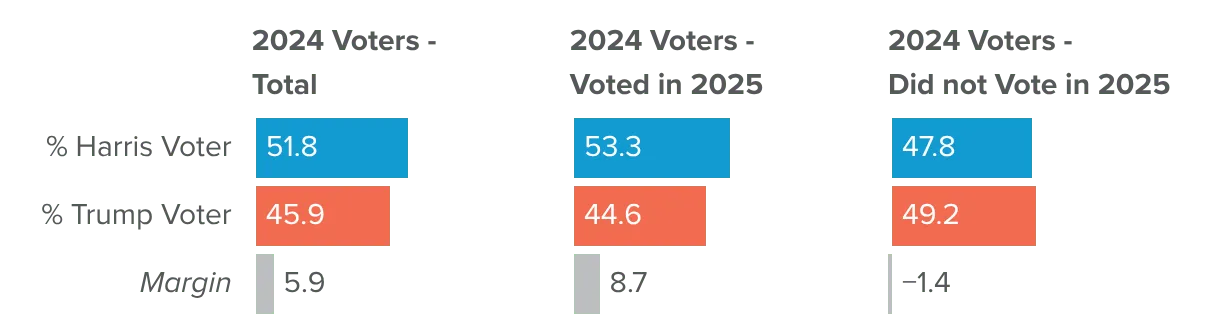
Overall, 73.0% of 2024 voters voted again in 2025. By comparison, just 58.3% of 2020 voters participated in the 2021 election. Change Research estimates that those who voted in 2024 and 2025 (92.8% of the electorate) went for Kamala Harris by 8.7 percentage points. 2024 voters who didn’t participate in 2025 went narrowly for Trump.
We see the same dynamic when comparing the 2025 contest to the 2021 one. 2021 voters who voted in 2025 went for Kamala by 8.4 points, while those who didn’t vote in 2025 went for Trump by 1.9 points.

Overall, the turnout rate for Harris voters was slightly higher than for 2024 Trump voters, reversing the dynamic from 2021, when 2020 Trump voters turned out at a higher rate than Biden voters did.
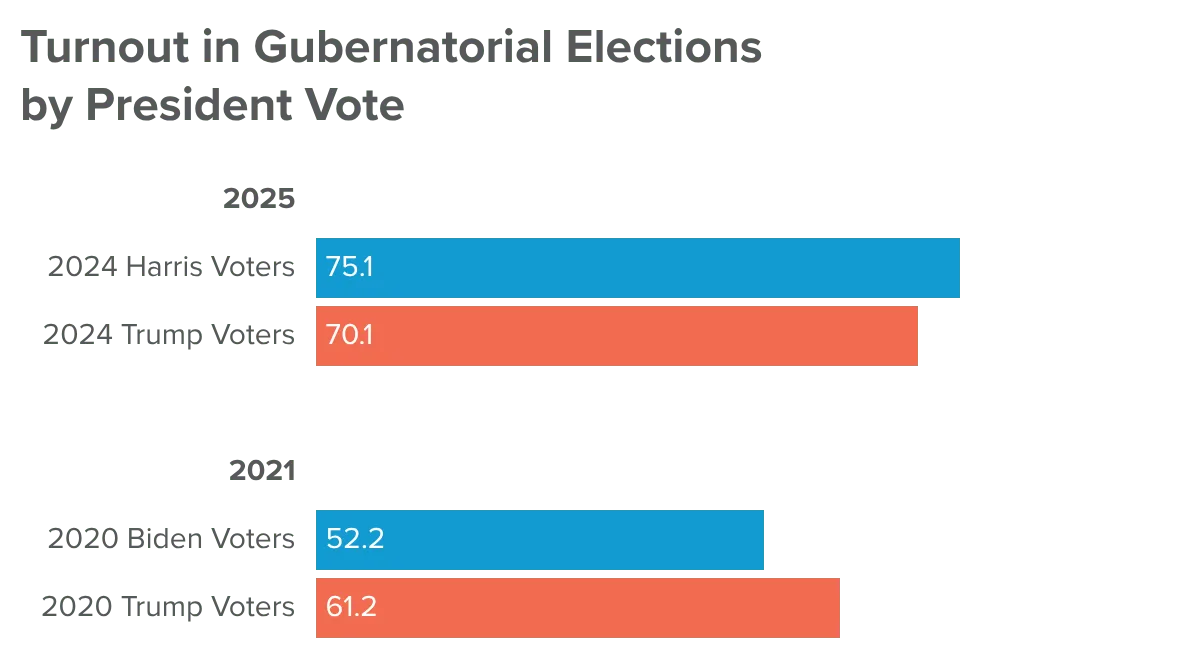
In 2025, we estimate that the electorate went for Kamala Harris by a 53.2% to 44.6% margin, a 2.7-point shift from Kamala Harris’s 5.9-point victory. Mikie Sherrill won by 14.4 points. We attribute this additional 5.8-point shift to vote switching—2024 Trump voters selecting Sherrill. In summary, we believe that more than two-thirds (68%) of the margin shift from Harris to Sherrill came from vote switchers, and 32% came from partisan differences in turnout.
This suggests the following for the election this year:
- We should expect record-breaking turnout for a non-presidential election, even in places where turnout fell from 2020 to 2024.
- Democratic turnout could be significantly higher than it was in 2021–2022, but so will Republican turnout. This could provide a firewall for Republicans that protects against losses in states/districts that went 10 points or more for Donald Trump in 2024.
- Improving Democratic turnout will not be enough to achieve big gains. Winning over Trump voters will. From what we saw in New Jersey, that is achievable.
See the full data behind this poll
Sign up for the award winning Change Research Data Portal to gain insights like these every month with new polling.