Does Mental Health Get Too Little Political Attention?
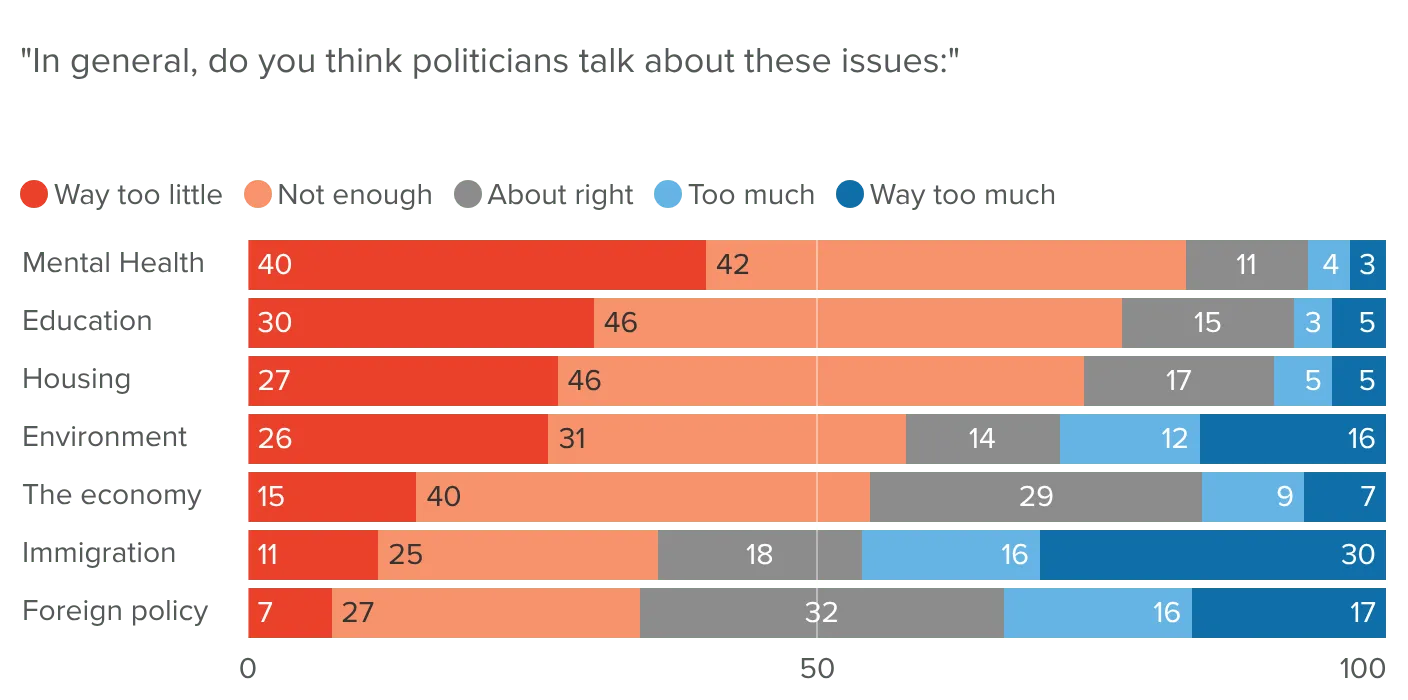
There is evidence that mental health has become an important issue for American voters, yet most say their elected officials are not giving it adequate attention. A Change Research national survey of 1,514 registered voters, conducted May 14 to 20, 2026, finds that 82% of voters say politicians talk about mental health “not enough” or “way too little”, making it the most under-discussed issue tested in the survey.
That figure stands apart from other issues that dominate political discourse. Asked whether politicians talk too much or too little about immigration, 46% of voters say politicians discuss it too much. 55% say politicians don’t discuss the economy enough. Just 7% say politicians discuss mental health too much, and 40% say politicians address it way too little.
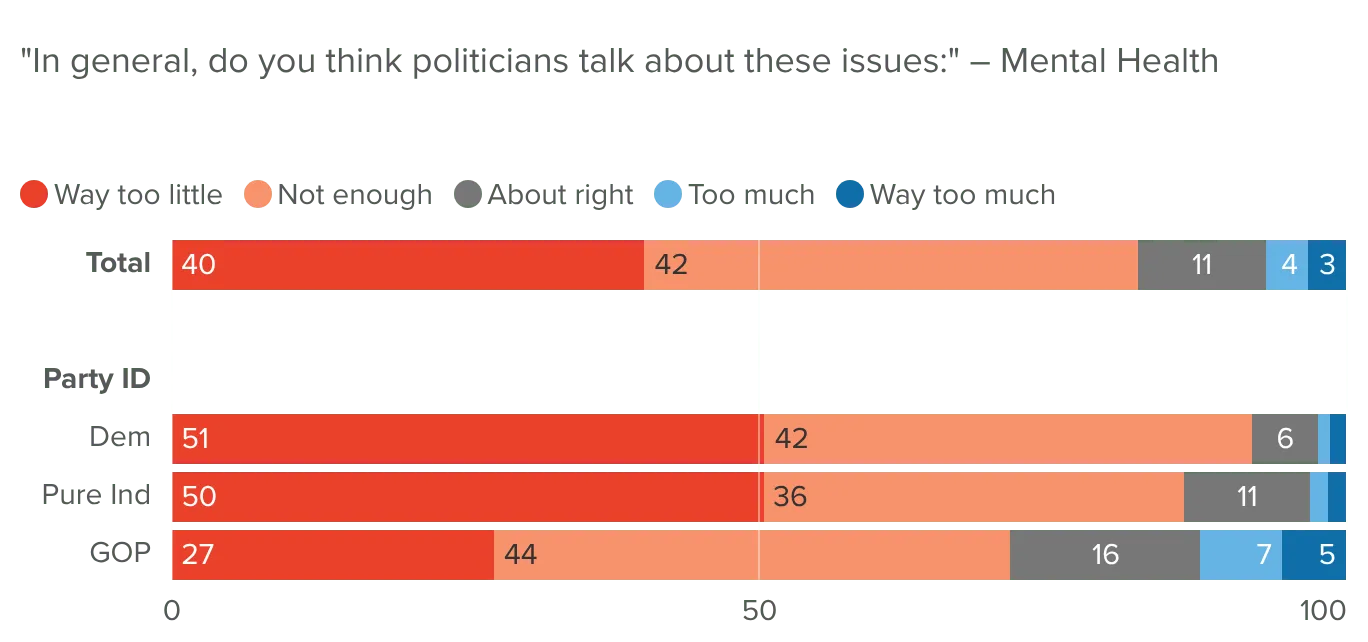
The finding holds across party lines. Among Democrats, 92% say mental health receives too little political attention. Among Republicans, 72% say the same. Only 2% of Democratic voters and 12% of Republican voters say politicians discuss mental health too much.
An Electoral Opening
63% of voters say they would be more likely to support a political candidate who makes mental health one of their top three priorities, including 22% who say significantly more likely. Just 7% say they would be less likely to support such a candidate.
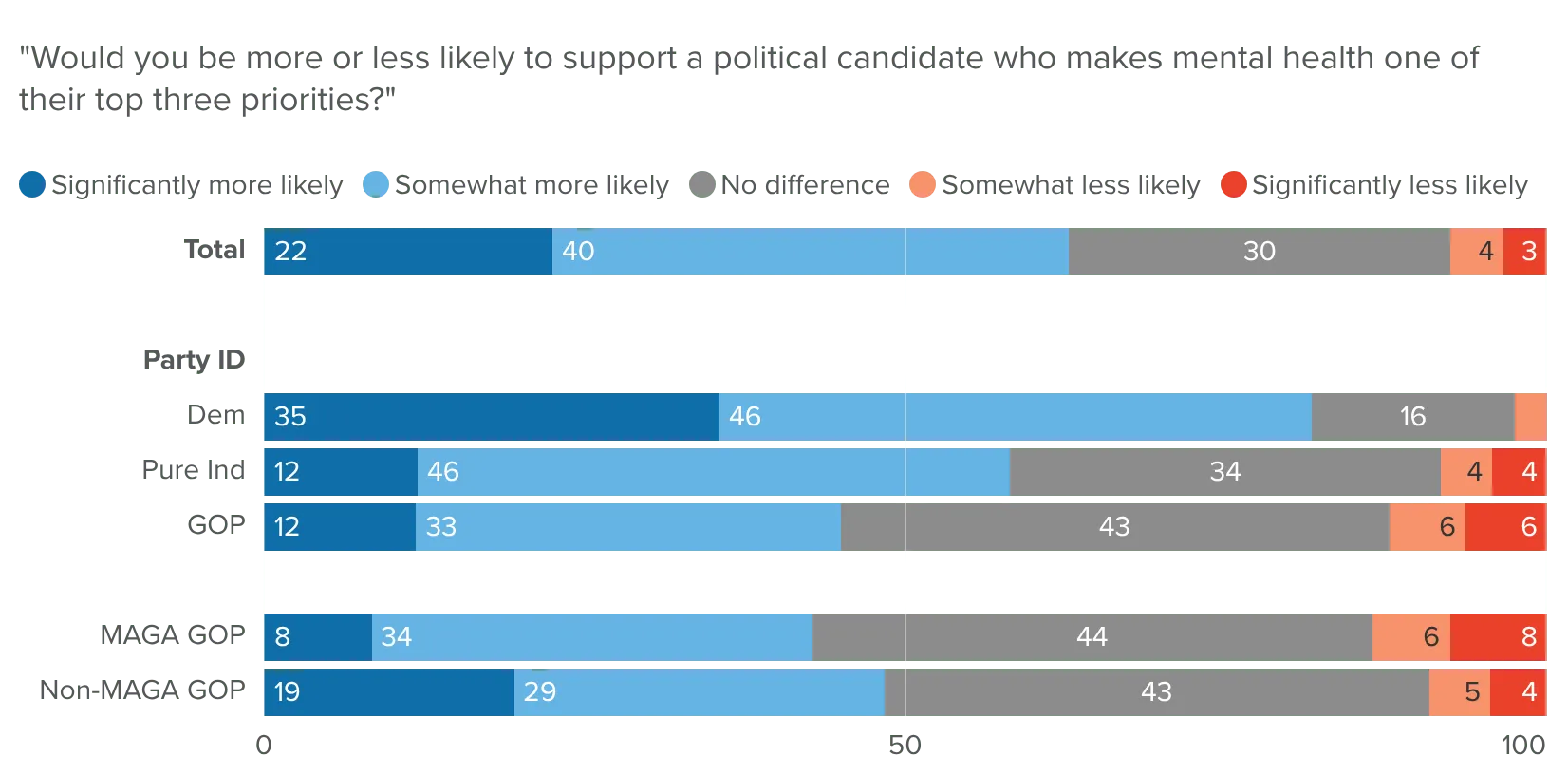
Among Democrats, 82% say they would be more likely to back a candidate who prioritizes mental health. Among Republicans, 45% say the same. 70% of women say it’s more likely they would support such a candidate; 54% of men say the same.
The survey finds broad demand for political attention to mental health that crosses parties and demographic groups. For candidates preparing for the 2026 midterms, the data points to an issue where voter interest substantially outpaces the current level of political discussion.
See the full data behind this poll
Sign up for the award winning Change Research Data Portal to gain insights like these every month with new polling.